At first, there was nothing.
Horses were fed hay twice a day on the floor or on the ground.
Feeding the horse on the box floor means forcing him to breathe the toxic ammonia gases always present in the bedding. As soon as you can sense the smell, the concentration is already 50 times higher than what is recommended for horses.
Feeding on the ground comes with the risk of sand colic and of the hay getting contaminated by whatever the horse might do on it.
Traditional large mesh hay nets existed, but far too much hay got wasted since so much fell through the net.
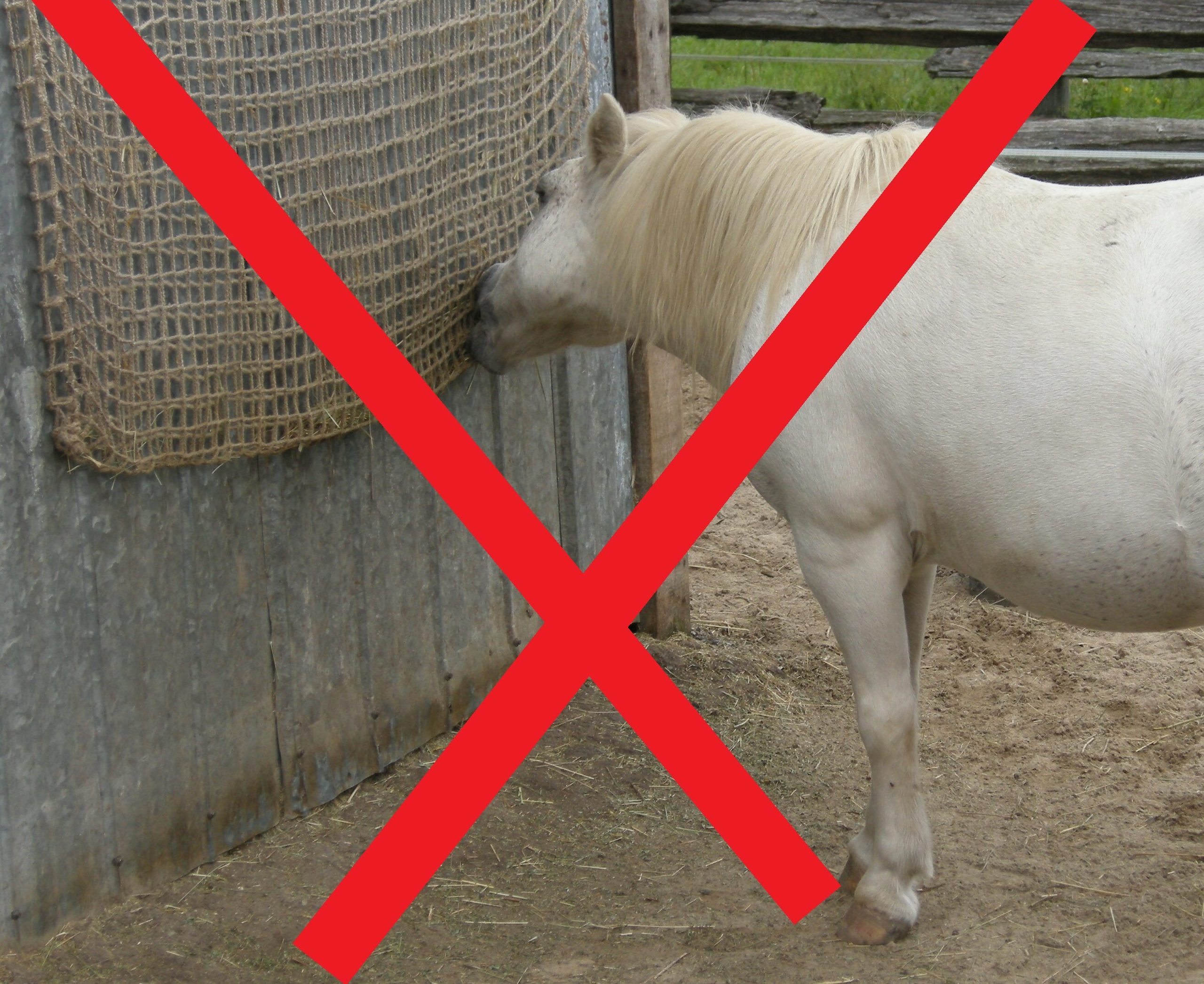
Then came SlowFeeding nets, which in theory were good solutions, but stuffing them is a tedious punishment for the caregiver, and horses were often forced to eat standing out of balance, with their necks twisted, or their heads pointing upwards.
Now SlowFeeding-Freedom is here, and fixed feeding schedules have become obsolete. There is no longer a need to feed your stalled horse more than once a day and your paddock horses more than once every other day, and still they will have continuous access to their hay without eating too fast or too much. The feeding labor has been reduced from taking 5 minutes two or three times a day to only taking 30 seconds once a day for stalled horses and 7.5 seconds per horse per day if you have three horses together in the paddock. Filling a SlowFeeding-Freedom Paddock Box takes 45 seconds and lasts two days for three horses when filled with compressed hay or whole 3-string bales.
If you are looking for something really tough for a box stall, then SlowFeeding-Freedom Optimal is worth checking out. This video shows an early version; the function and durability are the same, but the design details have changed, making the new model quicker to fill.
The small Optimal takes approximately 8kg=20lbs of dry loose hay and twice that if baled hay is used. The large Optimal takes approximately 16kg=40lbs of dry loose hay and twice that if baled hay is used. A SlowFeeding-Freedom Optimal takes some 30 seconds to fill.
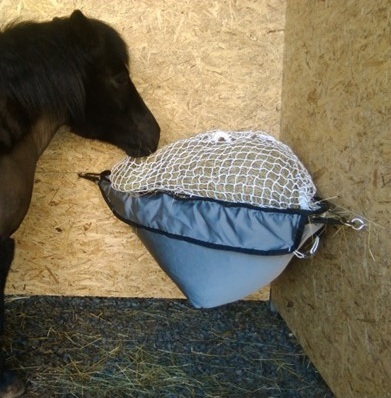
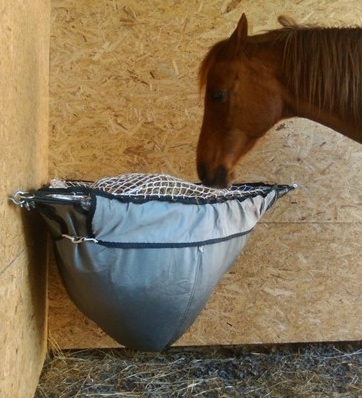
It usually takes between 5 minutes and 2 weeks for horses to get accustomed to a SlowFeeding-Freedom solution. The time it takes completely depends on the horse’s background. It’s better to exercise the horse more if he stands by the feeder continuously during this time than to restrict access.
The biggest advantages of SlowFeeding-Freedom are:
– You will never have to feed the horses more than once a day.
– Horses stop competing over hay, and don’t get surprised if you find multiple horses standing side by side eating, even if they were fighting over the hay before.
– The time each feeding takes is drastically reduced.
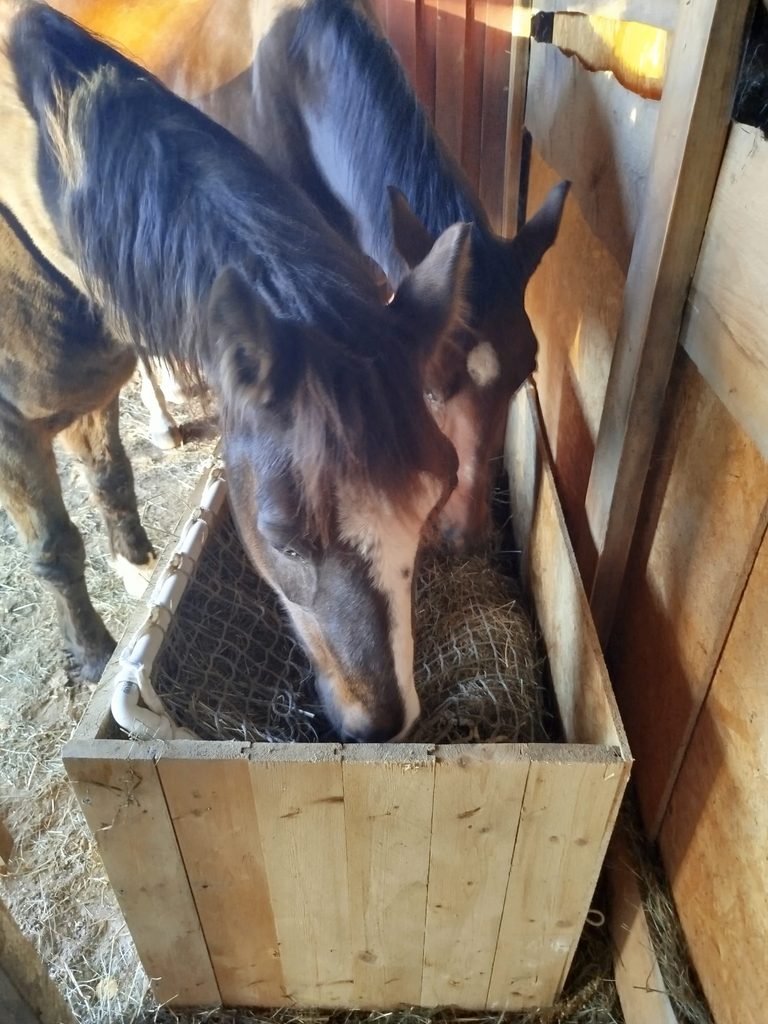
Horses of different sizes can have different needs.
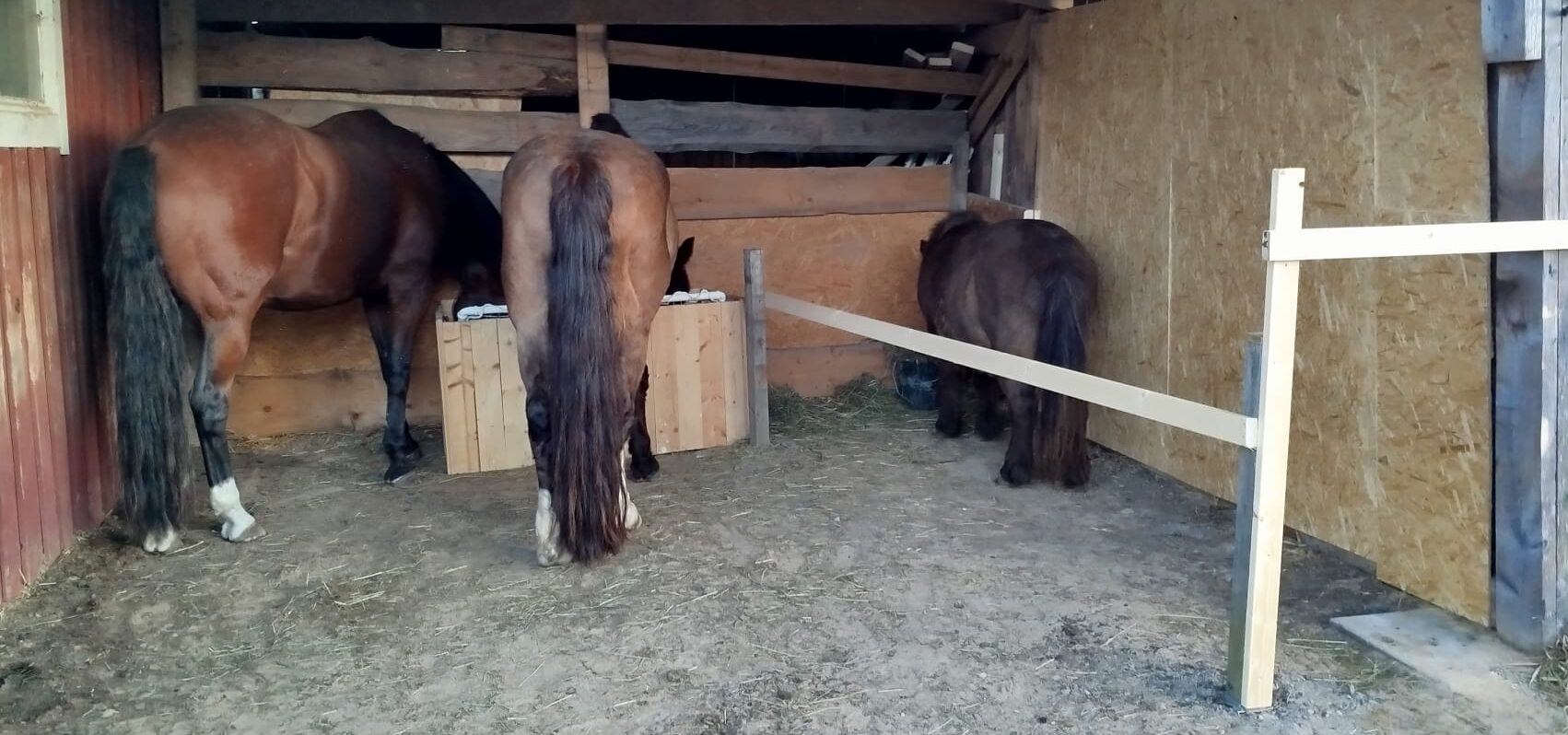
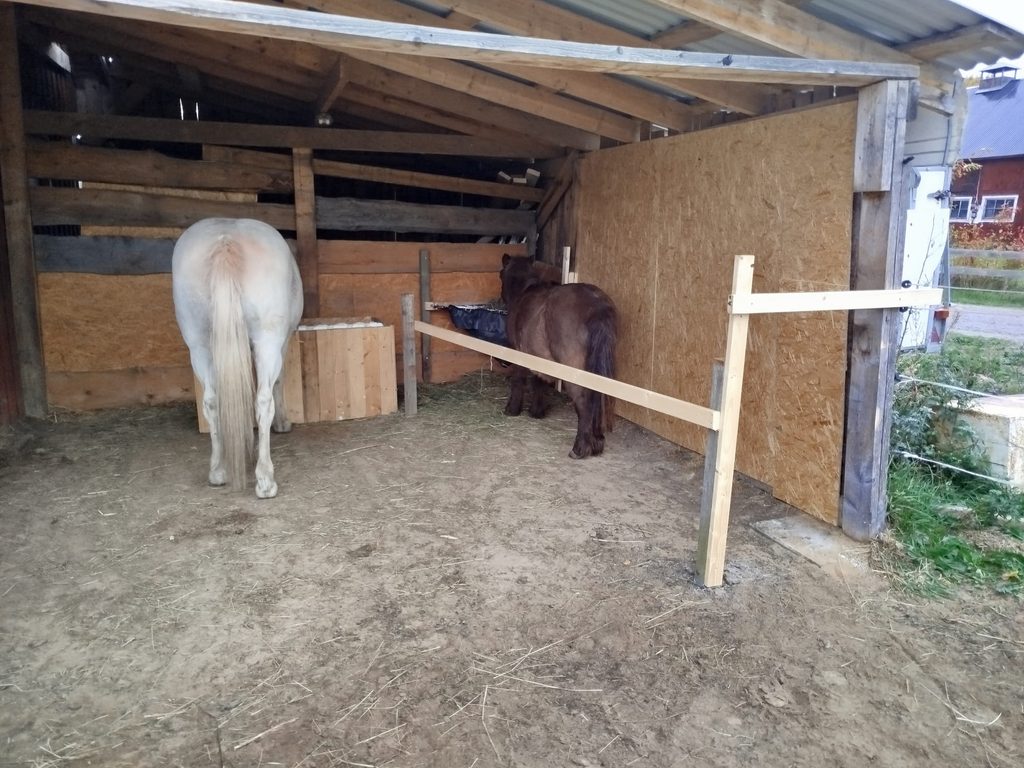
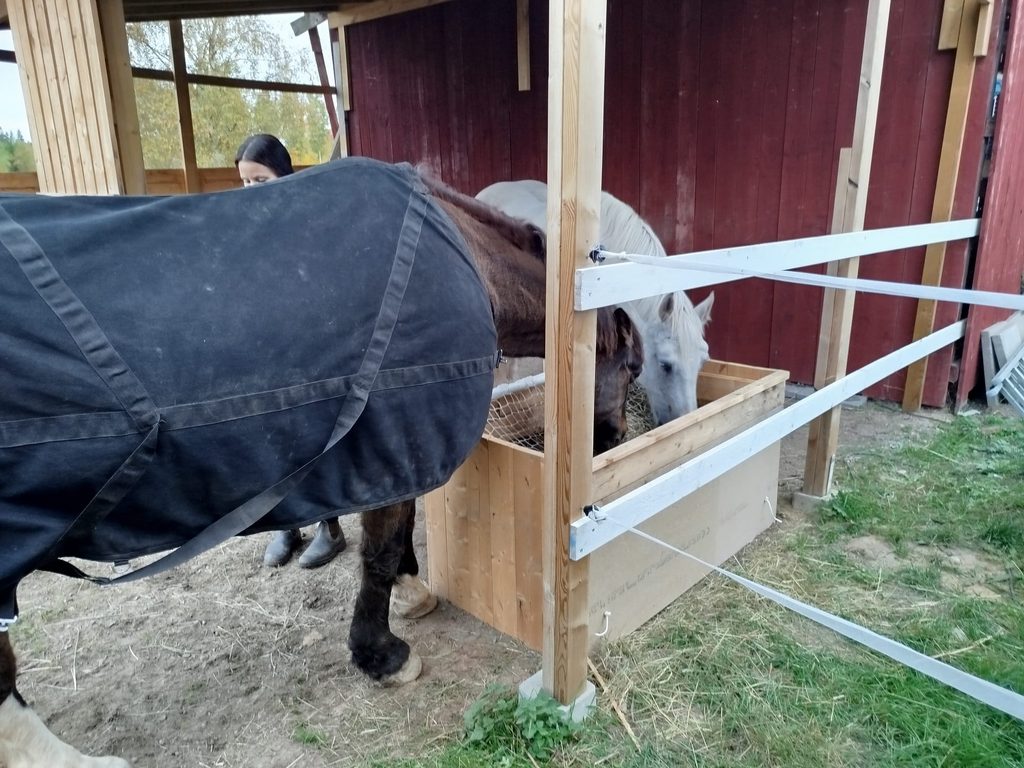
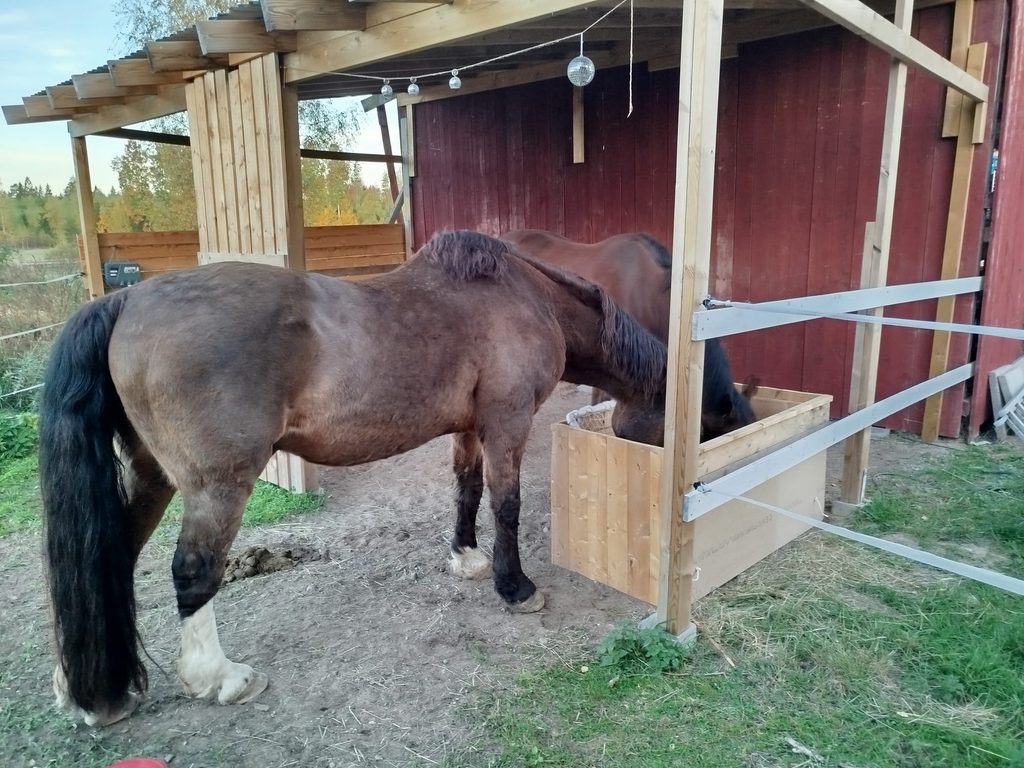
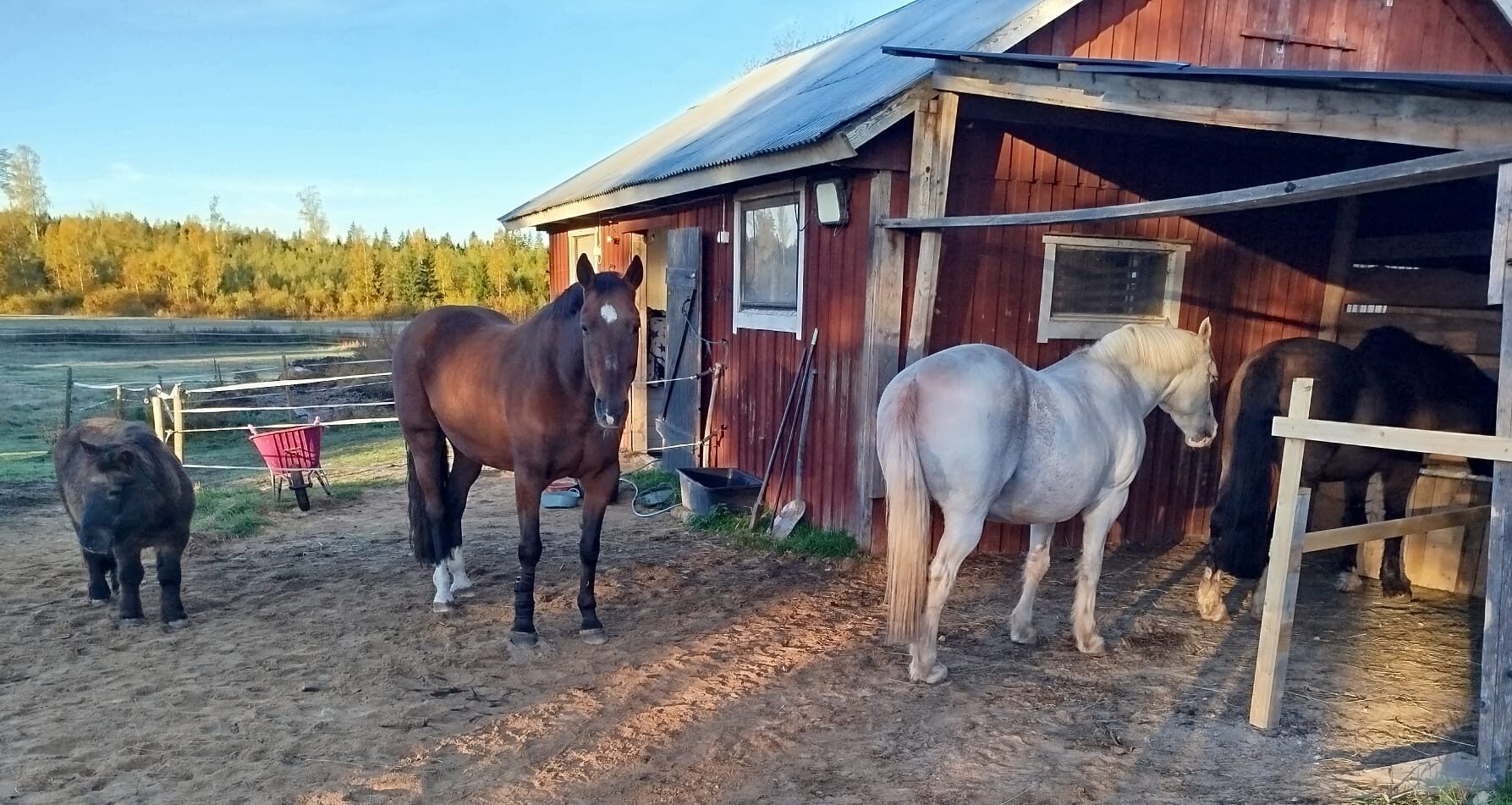
It took one week before the white pony got used to the fact that there is no end to the supply of hay and got rid of his eating phobia. The other three got it right away. The Shetland pony is 33 years old, and the Paddock Box is a little too high for her, so she got her own lane to the right where the others can’t enter. Here, she is just not hungry.
You can build your Paddock Box yourself from 1 sheet of plywood or whatever wooden material you have available, and just buy the net and the frame from us.
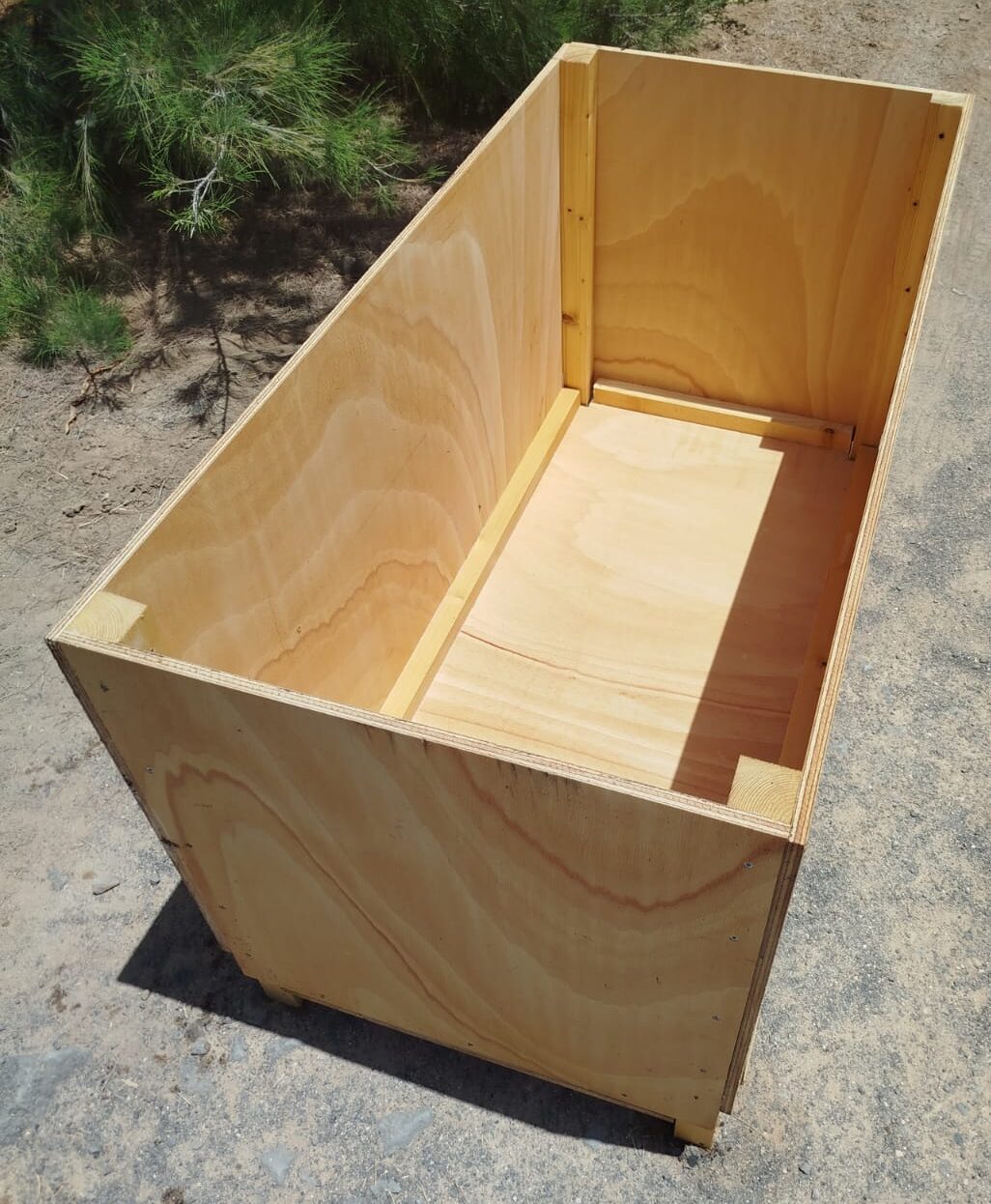
The Paddock Box has an inner dimension of 60x60x120cm = 2x2x4 feet.
As soon as JFC has agreed to produce rotation-molded feeders for us, we will have sturdy rotation-molded paddock boxes in polymers if you prefer ready-made.
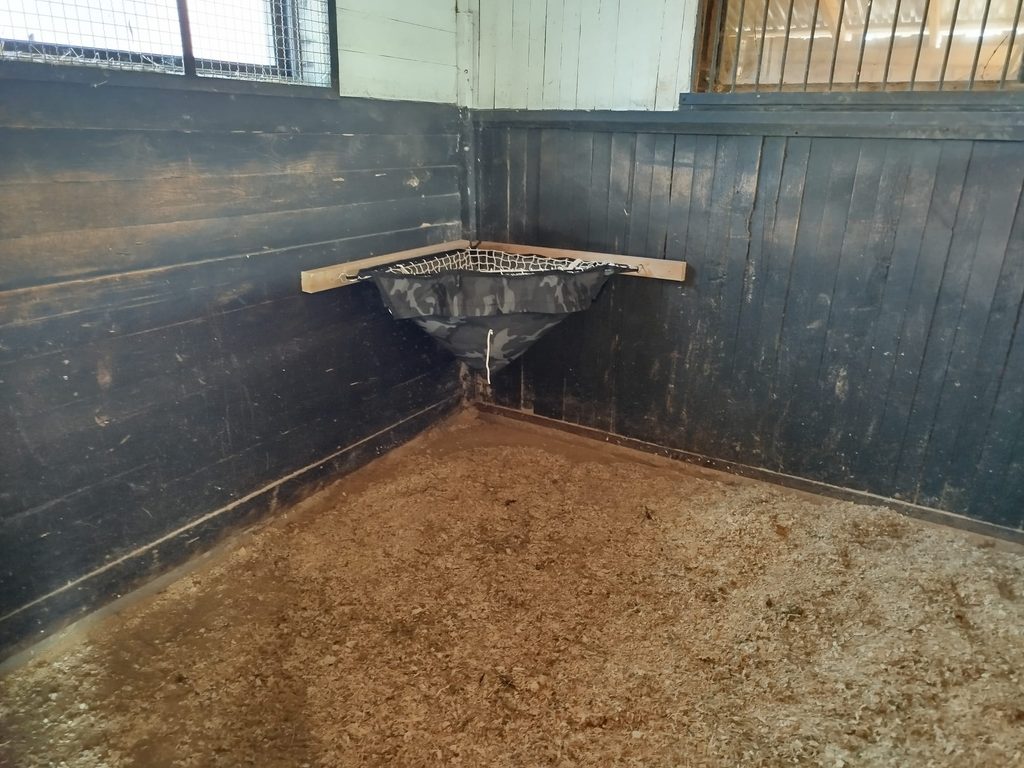
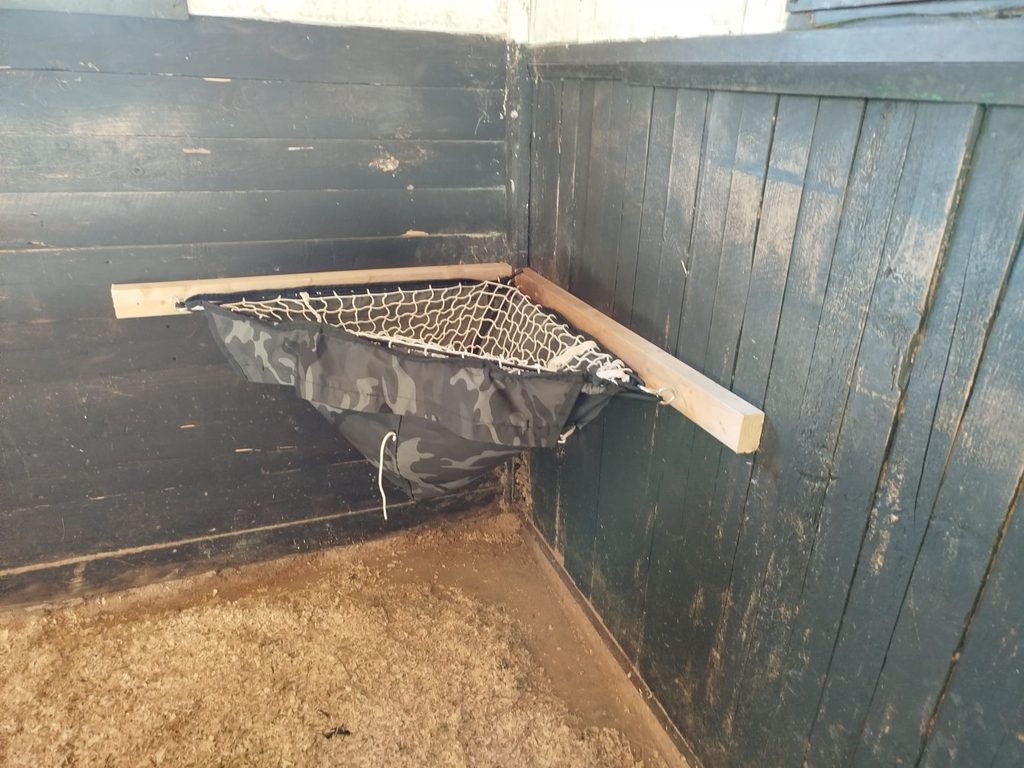
Then we will also have 2 sizes of the SlowFeeding-Freedom Corner Box seen below.
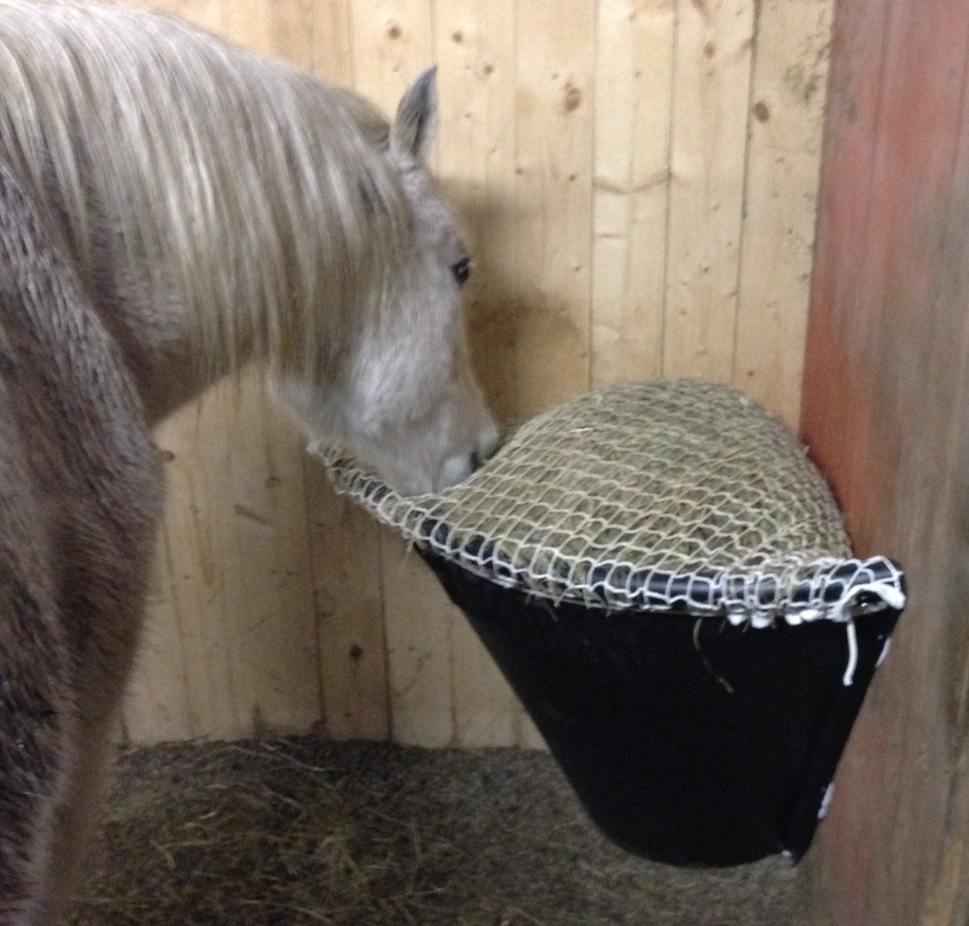
The feeder in the picture is a prototype that shows the principle. The real one will have an improved design and come in two sizes.
We also produce Slowfeeding-Freedom Nets for a DIY Pallet Box like in the pictures below. The height of this box is 80cm = 33″ which works well for 140cm = 14 hands ponies and above.
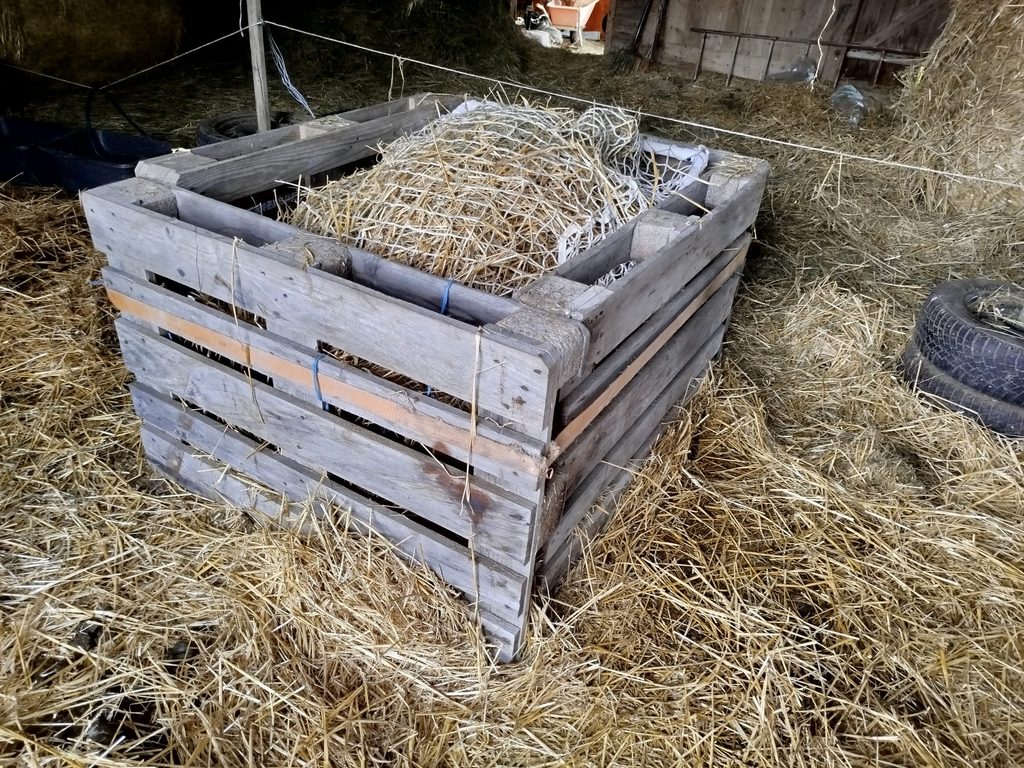
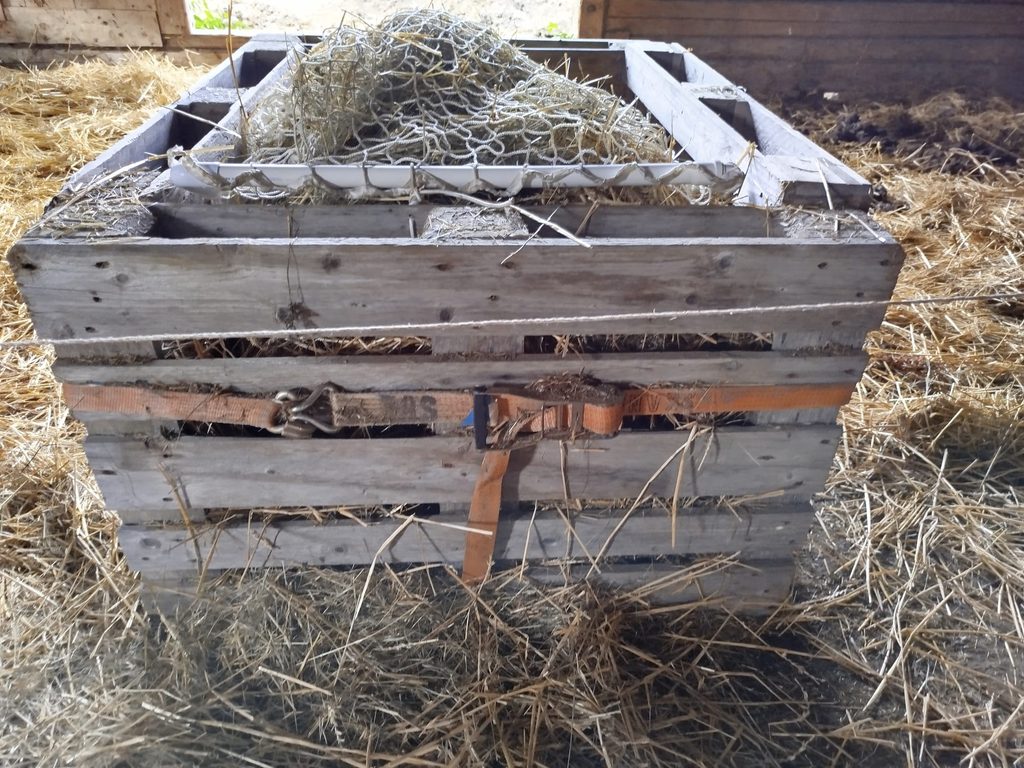
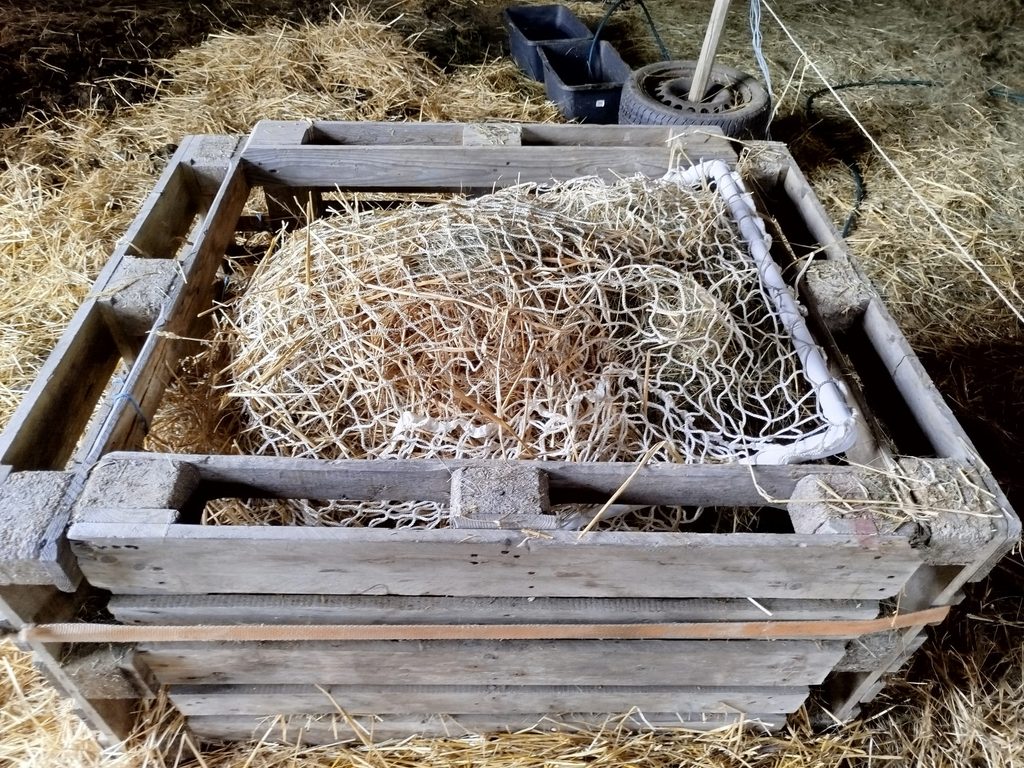
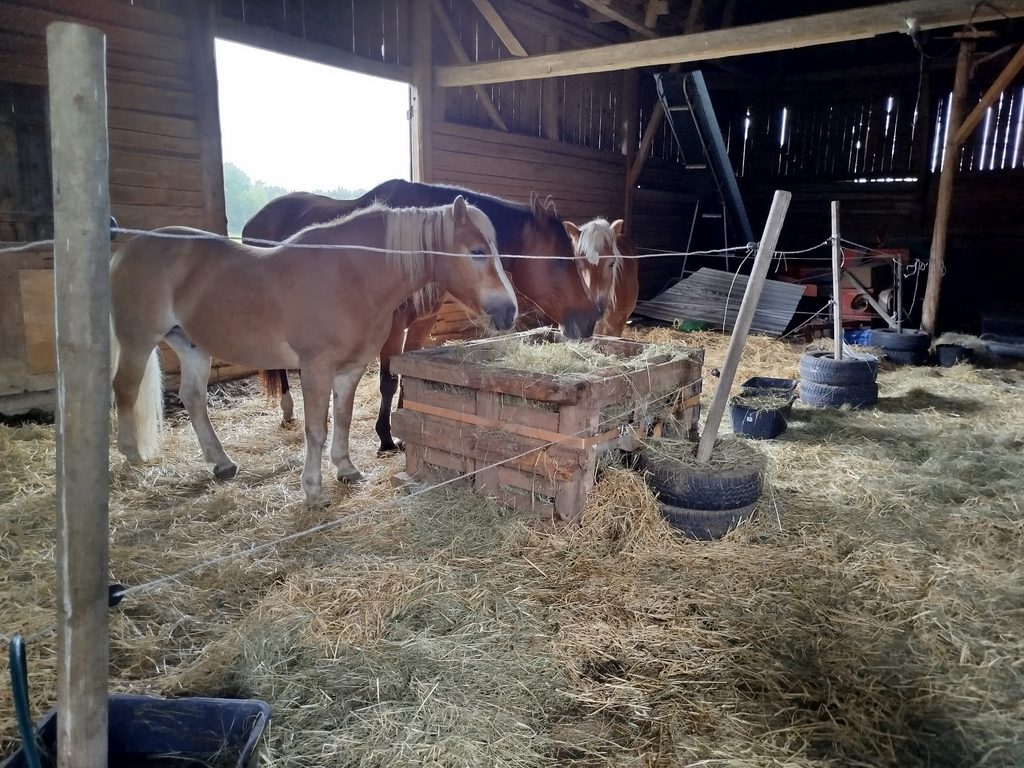
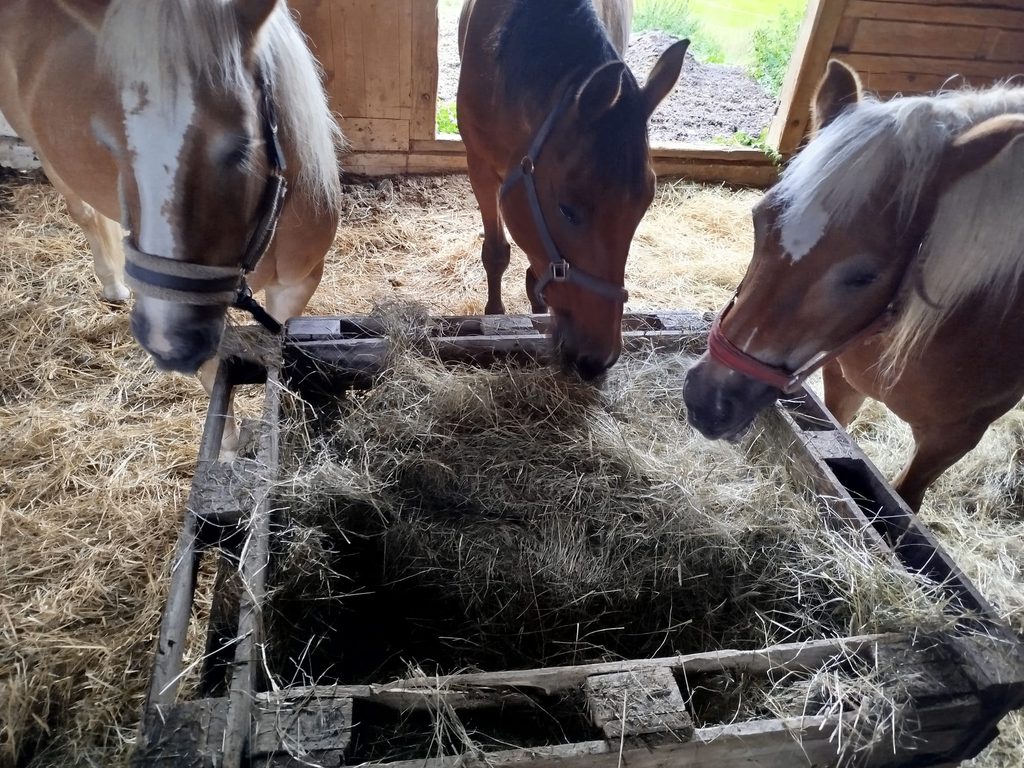
These three were fighting viciously over hay before they got their Pallet Box.
If you already own a JFC Haybell, you know that it’s very good for climate protection of your ponies’ hay.
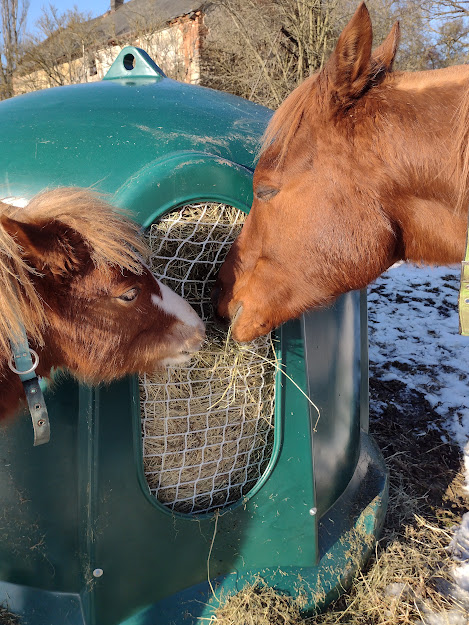
If you install a specially designed SlowFeeding net inside it, there will be no more wasted hay, and you will never have to touch the net again, unlike when using separate round bale nets. This net follows the JFC Haybell when you tip it.